Pages

Sunday, January 14, 2018

When Cuckoos Conqured Siloso - Singapore

End of December - 2017 

The week following the Christmas day, an interesting sighting occurred in Sentos,Singapore.

The Asian Emerald Cuckoo which is a rarity in Singapore was sighted perched in the open on a tree, the following week was a huge plus for the Birding Community of Singapore. Almost everyone's visit to the spot ended with a happy sighting of this rare cuckoo.

Asian Emerald Cuckoo,Sentosa - Dec 2017
The interesting part was not just this Cuckoo but over the days people observed nearly 6 species of Cuckoo., namely:

1. Asian Emerald Cuckoo
2. Large Hawk Cuckoo
3. Indian Cuckoo
4. Chestnut Winged Cuckoo
5. Hodgson's Hawk Cuckoo
6. Malaysian Hawk Cuckoo

The day I had visited, I was given the grace just two of the 6 species but was more than happy with sighting Emerald Cuckoo and wrapping up the year.

Indian Cuckoo, Sentosa - Dec 2017

Now the question what made all these cuckoos visit the same sight?

The cuckoo was mostly found perched on a Sea Fig (Ficus superba) tree that recently shed its leaves. Now when the new leaves and shoots were emerging, a family of Moths - Tussock Moths saw the abundance of food and hence laid down so much eggs that soon the Tussock Moth caterpillars were literally crawling everywhere from the tree to the ground below and the surrounding area, this in-turn tempted the cuckoos several off them in their migratory journey to stop and snack and regain themselves to continue their journey.

Emerald Cukcoo, Sentosa - Dec 2017
Glad to have witnessed in first person this interesting Natural History episode.

Thanks to Alan Owyong and Singapore Bird Group's - arctile on this.


Sunday, October 12, 2014

Flamingos of Lake Pulicat

It was the summer of 2002, I was on a summer break in Chennai staying at my Maternal Grandparent's home. when my Uncle told me he will show me Flamingos near Chennai. Being a newbie Bird-Watcher, I didn't believe him and argued back that Flamingos are only found in Africa and South America. He said why don't you come with me tomorrow to a place called Tada, an hour or two journey in train from Tiruvottiyur in North Madras.


Thus I came to know the existence of these beautiful pink coloured avian wonders quite nearby to home. :)


So next day was one of the most exciting and memorable birding days of my life.. I was so excited and happy to see these tall and graceful birds with naked eyes..I never felt the harsh summer sun nor the salty humid weather at the backwaters of Pulicat the entire day.This incident had a remarkable effect as it made me realise the need to know more about birds in my Country and prompted me to get my own copy of the bird guide book for the Indian Subcontinent. Looking through the guide I realised I had sighted just one among the two beautiful flamingo species found in our county, i.e the Greater Flamingo.


Flamingos in general are water birds which are called as waders. When they hatch they are greyish is colour and as they grow they acquire the magnificent pink colouration to their feathers due to the bacteria and beta-carotenes they obtain from their food.


They are social birds often found in large colonies consisting of hundreds and thousands of individuals and I was very surprised when in my recent trip I found out a lone individual casually feeding far away from the nearest colony. 


Flamingos are filter feeders, whose primary diet is Shrimps and Algae. Their beaks are specially adapted to separate mud and silt from the food they eat, and are uniquely used upside-down The filtering of food items is assisted by hairy structures called lamellae which line the upper portion of the mouth, and the large rough-surfaced tongue. Here is a picture depicting the typical upside down feeding style of flamingos.


Sadly in my last few visits I have been observing some disturbing trends. Proposals of development projects such as a Harbour and SEZs have led to an increase in the value of land around Pulicat leading to people converting their fertile cultivation lands to real estate plots thus adding worries to already dwindling agriculture practices. With the harbour and several associated industries coming up I wonder till when these beautiful birds and several thousands other resident and migratory birds can call this 2nd largest brackish water lake a safe haven.


Tuesday, October 15, 2013

Of Biking and Birding - In Search of the European Bee Eaters. Migrant Diaries #1


It all started in mid September this year, with a post from one of my friend's on facebook, stating the arrival of European Bee Eater at the Kanakpura - Galibore - Bheemeshwari area. That was more than enough to plan a trip in Search of these passing by migrants who had opted Cauvery Wildlife Sanctuary as a pitfall in between their long migratory route. High with enthusiasm plans were made but unfortunately they were never executed! :(
First Record Shot


Last Saturday when I and Yogesh were briding with some fellow birder from Bangalore, they mentioned sighting these guests the day before on their visit! And thus the idea hatched in the next 10 min... Myself very much eager for a long drive on my new bike and more eagerness to sight and watch these beauties.. I and yogesh decided to head out to the 100kms ( Approx) away Sangama area in Kanakpura and try our best to catch of glimpse of these birds in route.

A Common Crow

Starting early morning on Sunday- 13th of Oct, we headed out to Kanakpura, pleasant morning with a mild chill and the Sun slowly climbing the horizon, I enjoyed riding my bike all the way from Bangalore to Kanakpura... Truly Yamaha FZ is one hell of a bike to cruise along the highway and also one hell of a bike that endured my torture of driving in all terrain presented to us that day, Hats of Yamaha for this wonderful motorbike! :)
My beloved FZ


Crossing Kanakpura, one the way to Sangama our birding started with a Zitting Cisticolla, a lifer for me and charming little chap indeed.

Following the Zitting were Small Minivets, White Browed Bulbul, Sun birds, munias etc....

Zitting Cisticola


Small Minivet Taking Off


White Browed Bulbul

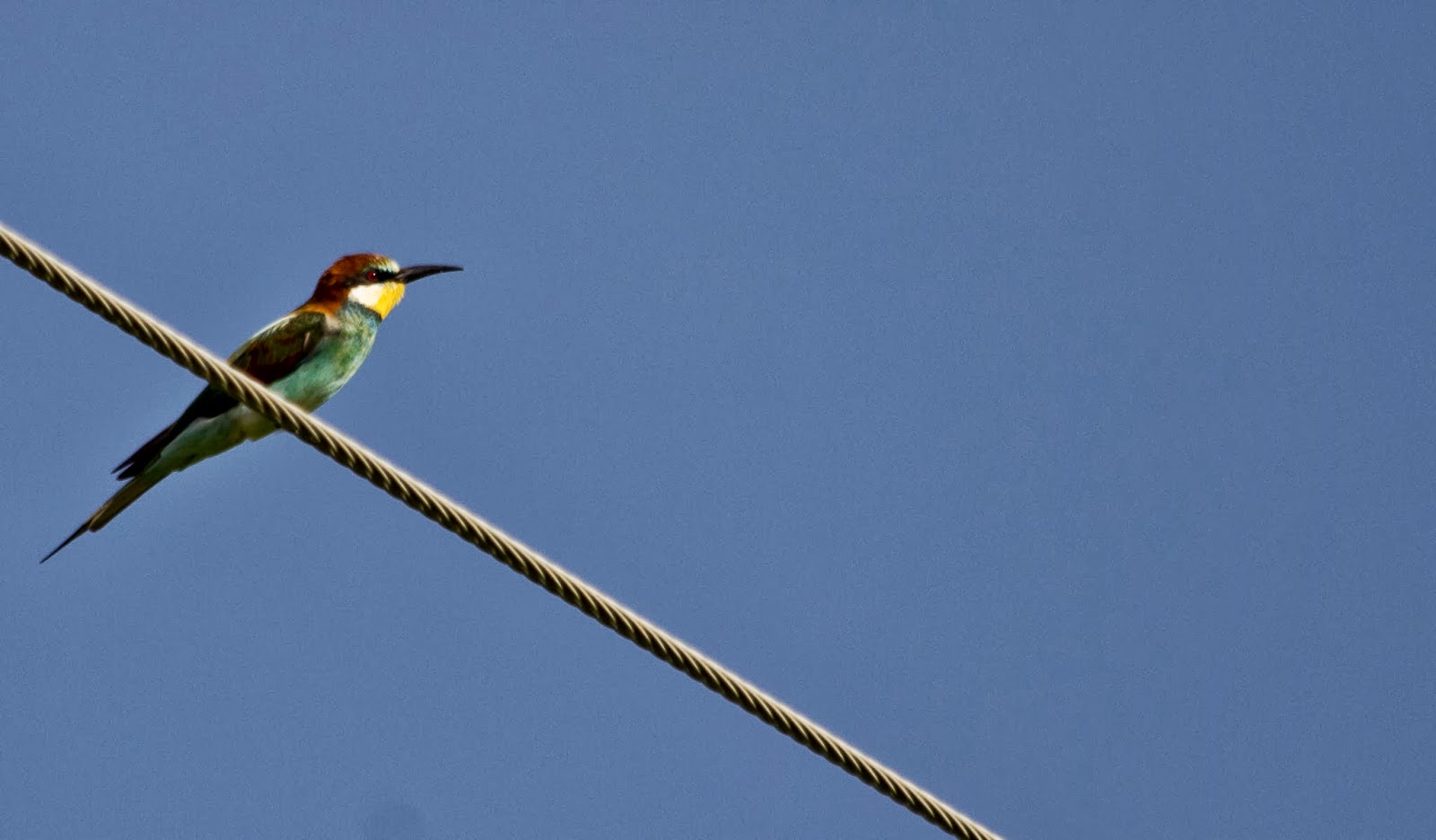
And finally having traveled around nearly 75 km, we came across the open cultivation lands, one of the favorite hangouts for our European Visitors and there we sighted our first European Bee Eater. The description given to us was so exactly the match, Larger than the normal Green Bee Eater, more brightly and vibrantly colored... they really standard apart!

Pioneer White or African Caper White laying eggs


Along with these we also sighted some Collared Dove and Ashy Crowned Sparrow Lark.

Having clicked some record shot, we continued to head towards Sangama, hoping to see some good Raptors and more closer views of Bee Eaters!

Our luck with the raptors was very bad, a single sighting but that too not a confirmed ID on the species!

We had some good time photographing the butterflies and wagtails!


Blue Tigers


With a dejected heart of not seeing the raptors we started our way back and to your luck we got some decent picture of the Bee Eater on the way back.


Having clocked a 250kms ( approx) on my first long trip and nearly 70% Successful trip of alteast having seen the Bee Eaters, we arrived back in Bangalore after another wonderful birding weekend. :)

The local resident Green Bee Eater


It was a day for the European Bee Eater indeed!.

The European Visitor

Friday, April 5, 2013

" Milestone No 1 " :)

Thanks to Deccan Chronicle for publishing my article and photographs, it is an honor. Feeling awesome to see my pictures in the paper. Looking forward for more such contribution and opportunities! :) 


Sunday, January 27, 2013

A Day with the Blackbucks


A charming Green Bee-eater

The beauty and charm of being in Bangalore apart from the climate, malls, pubs, liquor marts and pretty gals :P ;) is the proximity of the national parks, conservation reserves and many lakes in and around the Garden City.

Jayamangali Bluckbuck Conservation Reserve located around 130 km from Bangalore, is one such off beat wildlife zone. A beautiful grassland typical to the Deccan Plateau, its a beautiful place for photography and observing wildlife.

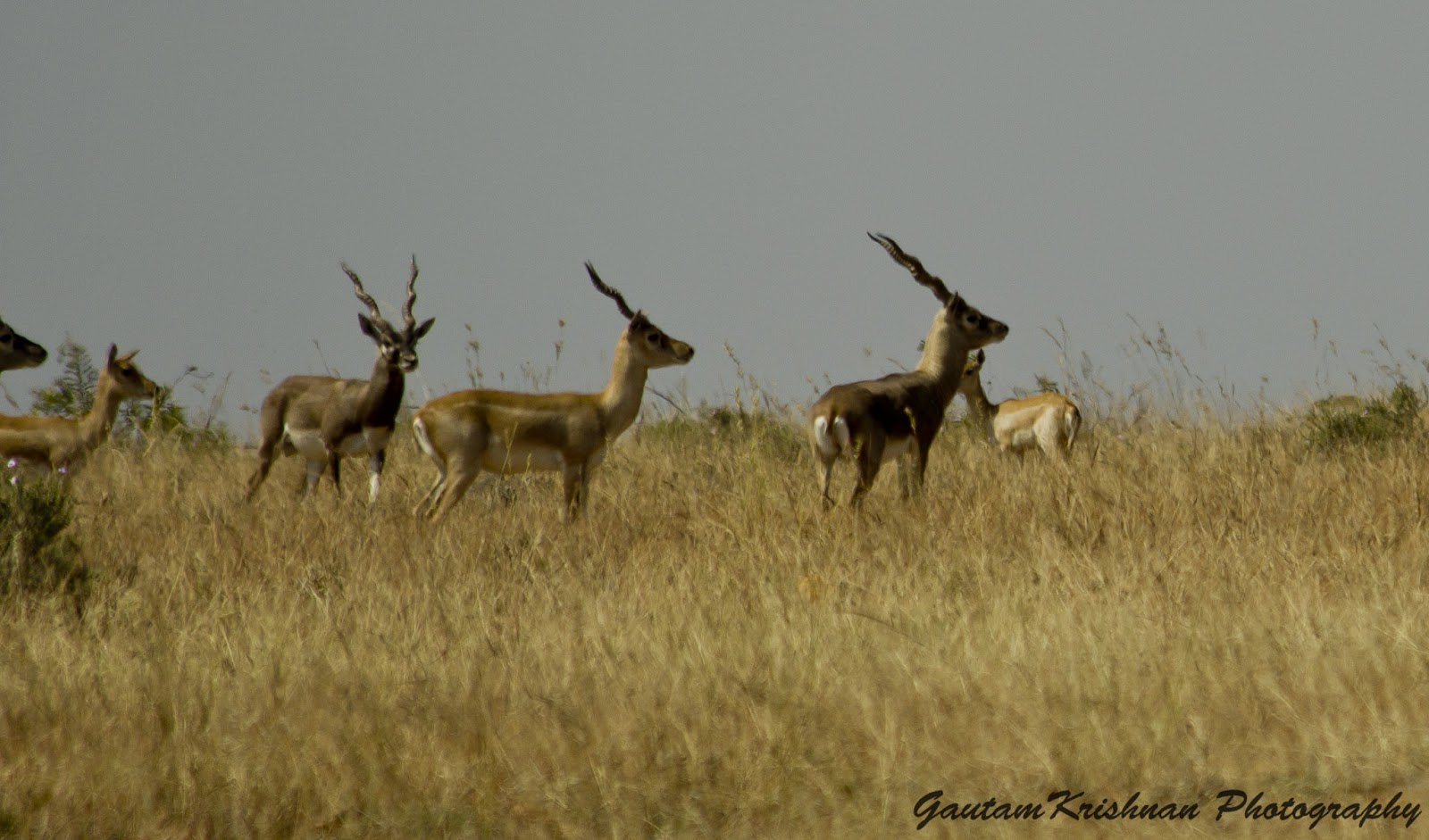
Known to have the 2nd largest population of Blackbucks in Karnataka, the reserve is a treat when it comes to Blackbucks. One can watch herds of them grazing merrily.

A Blackbuck Herd


Jayamangali is also a birders paradise. Harriers, shrikes, bee-eater, pipits, bulbuls and many others can be easily spotted.

A Montagu's Harrier


An ideal day would be reaching the spot before sunrise, spending the whole day there till sunset.This being my first trip and being an overnight plan, i couldnt spend much time there.
                                 

Even though being a protected area, basic amenities are yet to be provided, including forest guards and staffs. The protected area being just 3.23 kmsq, suffers from lots of pressure due to over grazing by local cattle herds, farming and industrialization.

Being a dry grassland with rolling rising and falling landscape, the place is a beauty and one of its kind, that needs to be preserved.

Saturday, October 27, 2012

A trip to Avalanche Lake

The charm of an off beat tourist destination is just different. Stunning vistas, charming people, road less traveled and if you are lucky, an interesting wildlife encounter, but the Best of all is the less tourist crowd!


A view of Avalanche Lake

Avalanche Lake is one such place, the lake being named after a huge land slide "Avalanche".   28 kms away from Ooty, in route to Upper Bhavani passing through one of the most beautiful landscape in the Nilgiris, the final destination the lake itself is a sight to behold!

Starting from Ooty, passing through lush green Horticulture fields, one reaches the Forest Check post at Avalanche, nearby which there is a one of the few Trout Fish breeding centers in India.


The rolling green hills and blue sky are just picture perfect

From the check post the road to Avalanche Lake passes through Mountane type forest full of mosses, ferns, flowering plants, orchids and beautiful waterfalls all of which makes up a part of  the Nilgiris Biosphere Reserve.


Merrily cascading water falls and blooming flowers are a sight to behold

Being a protected area, tourist vehicles beyond the check post are not permitted, but a local community initiative by the charming people of the Toda tribes is available, through which one can hire a jeep and a guide for the entire trip up to the lake and back to check post.


Beautiful grasslands and Sholas


All along the way the guide provides wonderful facts about the plants and ecology of the region and insights on Toda tradition and customs. 

Also one comes across flowering variants of the famous Kurinji Flower or Neela Kurinji ( Strobilanthes kunthiana ) which is  know for flowering once in every 12 years, causing a mass blooming of flowers during the monsoons creating a look of velvet carpet across the higher hills of the Western Ghats.


                                                  The annually flowering family members of the famous Kurinji Flowers

The flowering bushes, water gently cascading down the stream makes the place picture perfect.


Another beautiful vista
The Bhavani Temple located half way through the route is one of the most beautiful places i have ever been. The humble little temple along the stream surrounded by the rolling green hills gives the ultimate touch of spirituality to serene and tranquil location.
Tranquility at its best
The lake with its emerald blue waters and the lush green hills is a wonderful sight. If lucky one can spot wildlife along the lake and also in route. 
A curious Jackal looks on
The avalanche lake tourism is modeled in a effective sustainable method by employing the local communities and also restricting the number of tourist flow per day to around 10 trips approximately some 100 to 150 persons a day. Its one of the best example for conservation based Eco tourism and can act as an example for tourism in other ecologically sensitive area. As long as such an initiative works, conservation and tourism can go side by side ensuring preservation of the fascinating life among us.


Monday, June 4, 2012

Ducks,Moorhens,Pelicans and a Sea Eagle

Black Headed Ibis 

A plan hatched overnite, heading without directions and with absolute zero expectation! This was how I set myself to Pallikarnai early morning two Saturdays back, for my first birding trip in chennai. 

 
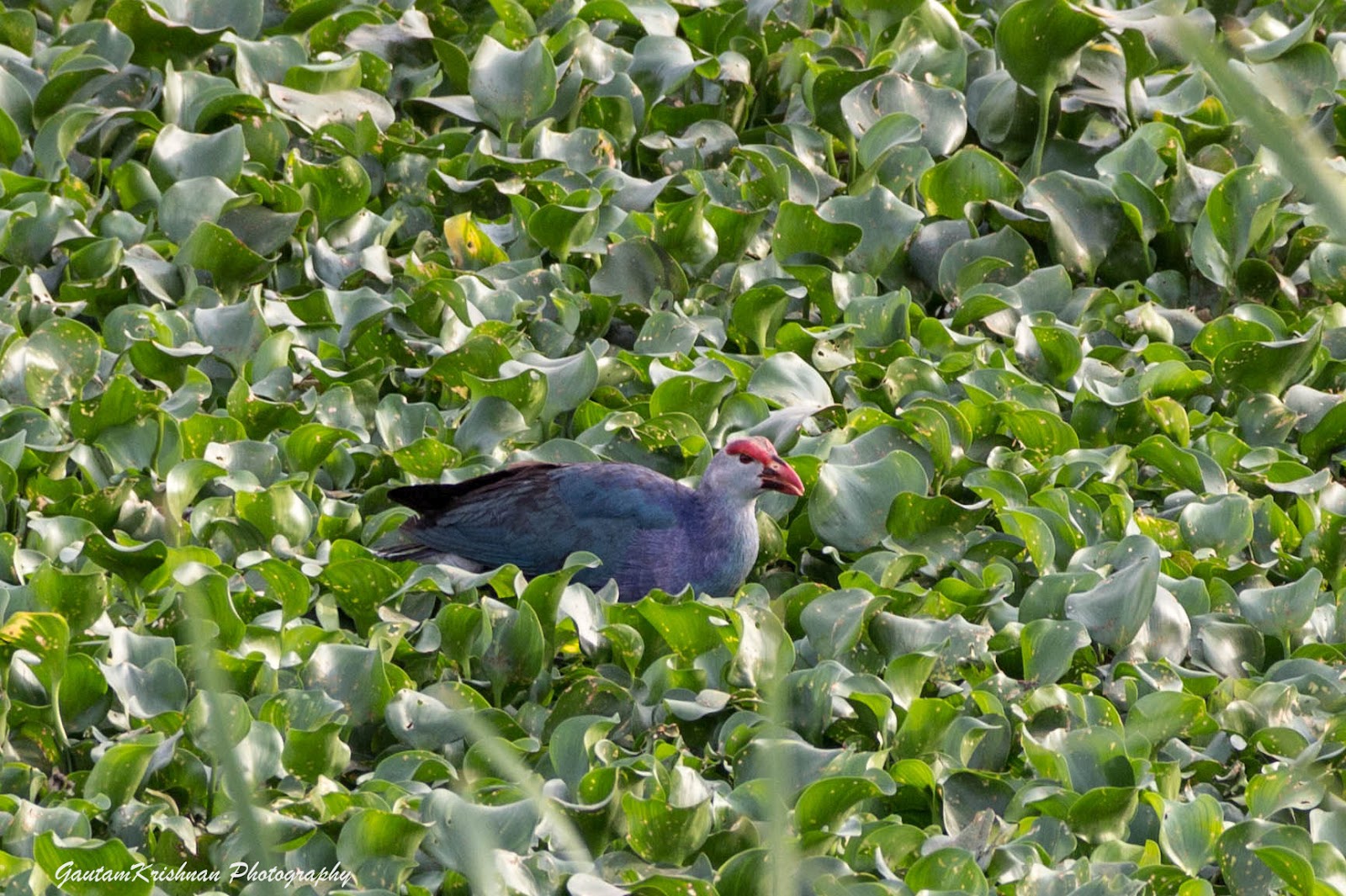
Purple Moorhen

Purple Moorhen


In the end it turned out to be pretty good day for birding.. especially Pallikarnai marsh.. the density and variety of birds out there was just stunning. 


Fulvous Whistling Duck

Fulvous Whistling Duck


The marsh was full of purple moorhens,fulvous whistling ducks,cormorants, black headed ibis, glossy ibis,spot billed ducks, common coot and a lot many, here are some pics i managed to click with my 18-135 mm lens.


Spot Billed Duck

Spot Billed Duck
Pallikarnai seemed to be perfect wetland habitat.. but what troubled  me the most was the presence of this land fill sight.. that's fast degrading this awesome and beautiful wetland that's home to so many species of birds.

The landfill sight on the back ground

Common Coot

A happy family of whistling ducks
Before we started towards ECR.. a pelican flew by.. proudly gliding with his massive wings.

Spot Billed Pelican

Spot Billed Pelican

In ECR it was again a search for pelicans and a casual visit to  the good old croc bank.


White throated Kingfisher

The pelicans gliding happily.
The search for pelicans turned out to be pretty rewarding.. with a group of nearly some 30 to 40 odd spot billed pelican and my first ever sighting of a white bellied sea eagle.

The flock of pelicans

White Bellied Sea Eagle

It was indeed a day for the pelicans..as again in ECR too another one flew past us..with those Majestic Wings!

White Bellied Pelican

White Bellied Pelican